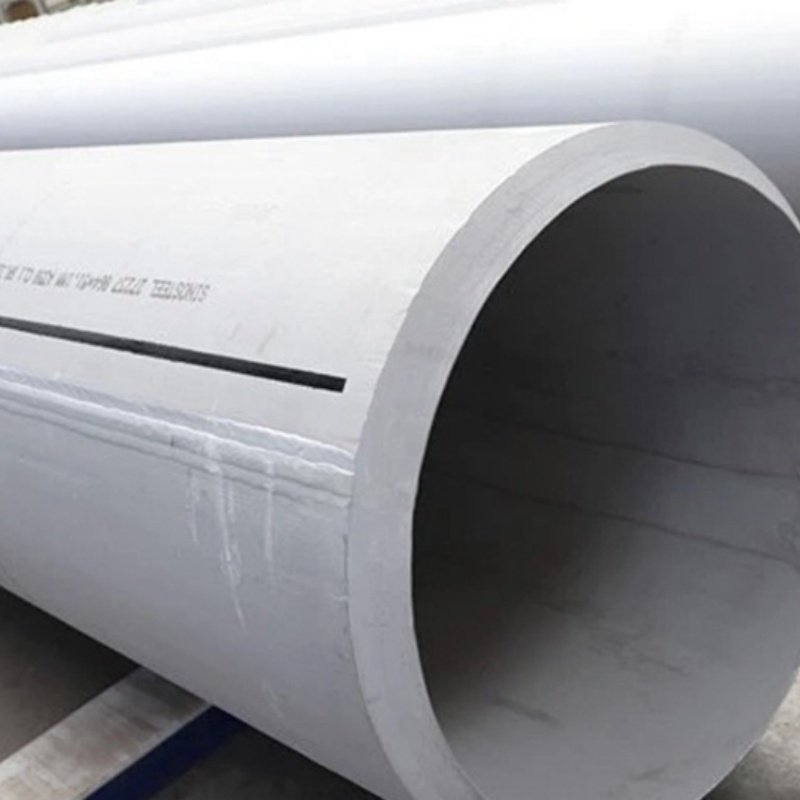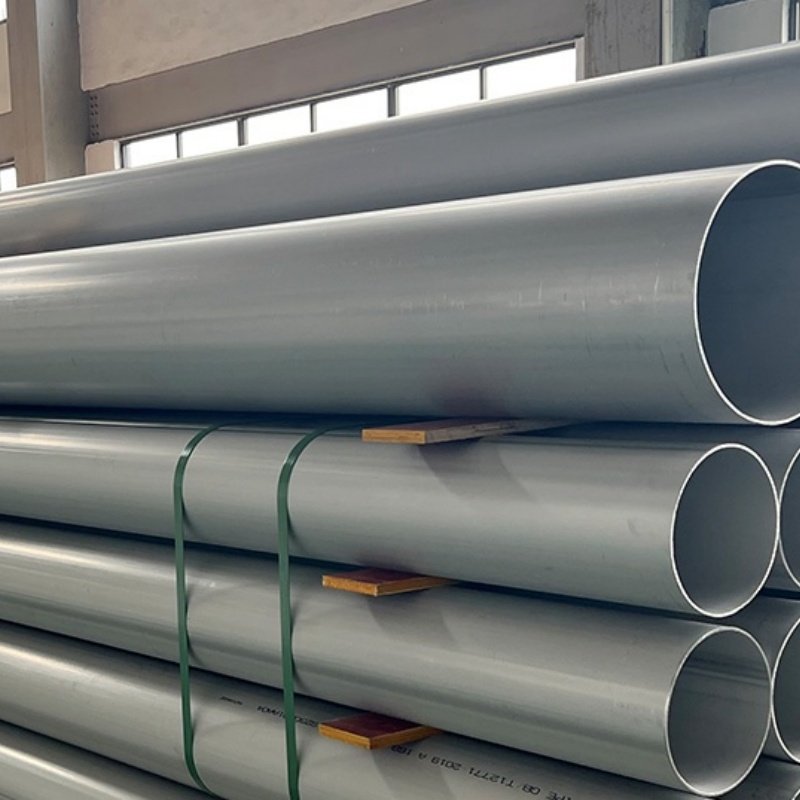


Nickel 200 (UNS N02200) and Nickel 201 (UNS N02201) are
commercially pure nickel alloys supplied as seamless pipe and tube to ASME SB-161.
Nickel 201 is the low-carbon variant, intended for service at higher temperatures where carbon
precipitation would be detrimental.
Dual Standard Designation
| Designation | Specification | Product form |
|---|---|---|
| UNS N02200 | W.Nr. 2.4066 | Nickel 200 identification |
| UNS N02201 | W.Nr. 2.4061 | Nickel 201 identification |
| ASME SB-161 | ASTM B161 | Nickel seamless pipe and tube |
| ASME SB-163 | ASTM B163 | Seamless condenser & heat-exchanger tubes |
SB-161 Scope 1.1 covers UNS N02200 and N02201 in cold-worked seamless pipe and tube. Note that
SB-163 is the condenser and heat-exchanger tube specification: it carries the same alloys but a
different product form and different hardness provisions, and it is not the correct citation for
general pressure piping.
Chemical Composition (ASME SB-161, Table 2)
| Element | UNS N02200, % | UNS N02201, % |
|---|---|---|
| Nickel, min A | 99.0 | 99.0 |
| Copper, max | 0.25 | 0.25 |
| Iron, max | 0.40 | 0.40 |
| Manganese, max | 0.35 | 0.35 |
| Carbon, max | 0.15 | 0.02 |
| Silicon, max | 0.35 | 0.35 |
| Sulfur, max | 0.01 | 0.01 |
A Element shall be determined arithmetically by difference. Product (check) analysis
variations per Specification B 829 (SB-161 5.2).
Mechanical Properties (ASME SB-161, Table 1)
| Condition and size | Tensile min, psi (MPa) N02200 / N02201 | Yield 0.2% offset min, psi (MPa) N02200 / N02201 | Elongation in 2 in./50 mm (or 4D), min % |
|---|---|---|---|
| Annealed, 5 in. (127 mm) OD and under | 55 000 (380) / 50 000 (345) | 15 000 (105) / 12 000 (80) | 35 / 35 |
| Annealed, over 5 in. (127 mm) OD | 55 000 (380) / 50 000 (345) | 12 000 (80) / 10 000 (70) | 40 / 40 |
| Stress-relieved, all sizes | 65 000 (450) / 60 000 (415) | 40 000 (275) / 30 000 (205) | 15 / 15 |
Each pipe or tube shall be subjected to the nondestructive electric test or the hydrostatic test,
either at the producer’s option unless the purchaser specifies (SB-161 6.2).
Size Range
Dimensions per ASME B36.19M for pipe; tolerances per B 829, and per Table X1.2 for
small-diameter light-wall converter sizes. Cold-drawn small-bore sizes are common for instrumentation
and heat-exchanger service. Send us your OD and wall list.
| NPS | OD (in) | OD (mm) | Sch 5S (mm) | Sch 10S (mm) | Sch 40S (mm) | Sch 80S (mm) |
|---|---|---|---|---|---|---|
| 1/2 | 0.840 | 21.34 | 1.65 | 2.11 | 2.77 | 3.73 |
| 3/4 | 1.050 | 26.67 | 1.65 | 2.11 | 2.87 | 3.91 |
| 1 | 1.315 | 33.40 | 1.65 | 2.77 | 3.38 | 4.55 |
| 1 1/2 | 1.900 | 48.26 | 1.65 | 2.77 | 3.68 | 5.08 |
| 2 | 2.375 | 60.33 | 1.65 | 2.77 | 3.91 | 5.54 |
| 3 | 3.500 | 88.90 | 2.11 | 3.05 | 5.49 | 7.62 |
Manufacturing Route & Heat Treatment
Cold-worked seamless pipe and tube per SB-161 Scope 1.1, furnished annealed or stress-relieved as
per Table 1. SB-161 defers general requirements to B 829 and gives converter-size properties
separately in Table X1.1.
Inspection & Certification
- Chemical analysis one per lot; tension test one per lot (SB-161 8.1, 8.2)
- Hydrostatic or nondestructive electric test on each piece in each lot (SB-161 8.3)
- For SB-163 condenser / heat-exchanger tube supply, additional flare and hardness provisions apply
- PMI available on request
- MTC EN 10204 3.1 standard; 3.2 on third-party witness
Packing & Delivery
Plastic end caps; wooden crates or bundles; VCI anti-rust wrapping for storage. Plain or beveled ends;
cut lengths available.
Applications
Caustic soda and chlor-alkali service, hydrofluoric acid alkylation units, mercury and bromine
handling, caustic evaporator and crystalliser piping, alkali storage and transfer lines, chemical
process dosing, heat-exchanger tube bundles.
Technical Notes
1. 0.15% versus 0.02% carbon — this single figure decides whether the grade is usable at
temperature. SB-161 Table 2 puts the carbon maximum at 0.15% for N02200 and
0.02% for N02201. Through the intermediate temperature region, the higher carbon in
Nickel 200 risks carbon segregation and graphitisation embrittlement: carbon migrates to grain
boundaries and forms a carbide network, and impact toughness collapses in that mid-temperature range.
Any caustic, molten-salt or carbon-bearing service running hot must be Nickel 201. This is the one
decisive difference between the grades, and it is not about strength and not about corrosion
resistance — it is purely about carbon.
2. Yield strength moves the wrong way with diameter, so you cannot extrapolate a small-bore
result to a large-bore one. SB-161 Table 1 gives annealed N02200 a yield minimum of
15 000 psi (105 MPa) at 5 in. (127 mm) OD and under, dropping to
12 000 psi (80 MPa) above 5 in., with elongation rising from 35% to 40%. N02201
follows the same pattern, 12 000 psi down to 10 000 psi. So the specification value itself steps at the
5 inch line, and large-bore pure nickel pipe has a genuinely lower allowable basis than small-bore
pipe of the same grade and wall. Quotation and wall-thickness calculations must be locked to the actual
OD; using the small-bore number for a large-bore line is a straightforward over-design of the
allowable stress.
3. Stress-relieved buys strength at the cost of nearly all the ductility. In the
stress-relieved condition, N02200 reaches 65 000 psi tensile and 40 000 psi yield — far above
annealed — but elongation falls to 15%, against 35–40% annealed. The
stress-relief treatment exists to remove residual stresses that would otherwise drive stress-corrosion
cracking or hydrogen-assisted cracking in service, and the ductility that gets spent in removing them is
not recoverable. For any pipe that will be bent, expanded or otherwise formed after delivery, order the
annealed condition. Stress-relieved material is appropriate for fixed, thin-wall runs where resisting
deformation matters and no forming will follow. The two conditions should not be mixed within one
design basis.
Frequently Asked Questions
What is the difference between Nickel 200 and Nickel 201?
Carbon content. UNS N02200 (Nickel 200) has a 0.15% carbon maximum while UNS N02201 (Nickel 201) is
limited to 0.02%. Nickel 201 is used at higher temperatures because the low carbon content avoids
graphitisation and embrittlement.
Which ASME specification covers Nickel 200/201 pipe?
ASME SB-161, identical to ASTM B161, Nickel Seamless Pipe and Tube, which lists both UNS N02200 and
N02201. SB-163 covers the same alloys as condenser and heat-exchanger tubes.
Is Nickel 201 suitable for caustic service?
Yes. Nickel alloys are the standard material for caustic soda service, and Nickel 201 is the preferred
grade where temperature exceeds roughly 300 °C, because of its low carbon content.
Why does yield strength differ by pipe size?
ASME SB-161 Table 1 sets different minimum yield values above and below 5 in. (127 mm) outside
diameter — 15 000 psi against 12 000 psi for Nickel 200. Wall thickness calculations must use the
value for the actual OD.
What is the difference between annealed and stress-relieved condition?
Stress-relieved gives a much higher yield strength, 40 000 psi against 15 000 psi for Nickel 200, but
reduces elongation to 15%. The choice depends on whether the pipe will be formed after delivery.
Do you supply Nickel 200/201 in cut lengths?
Yes. Please confirm required length, OD, wall thickness and end preparation.