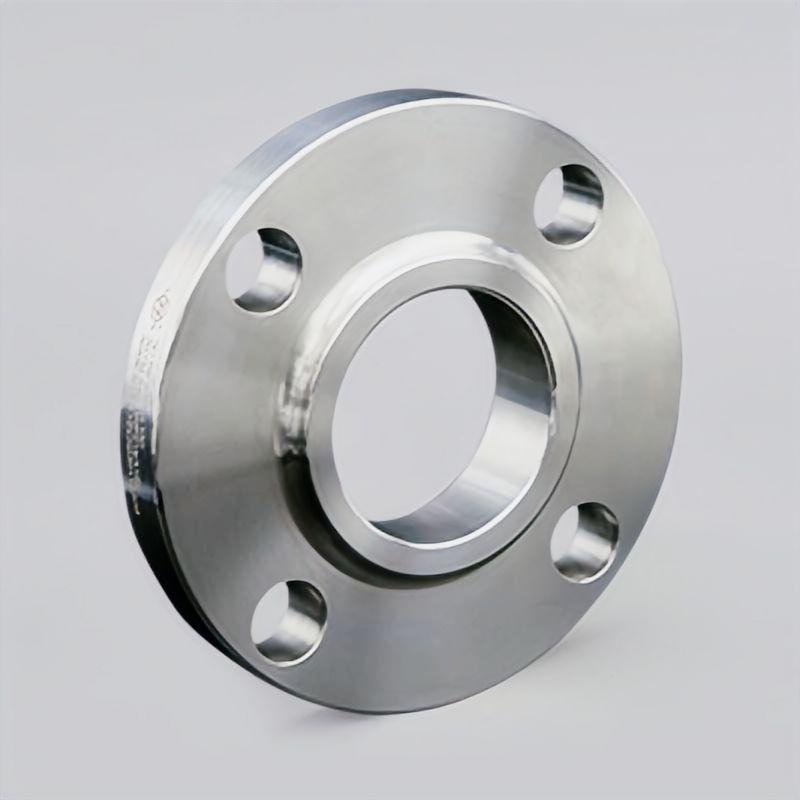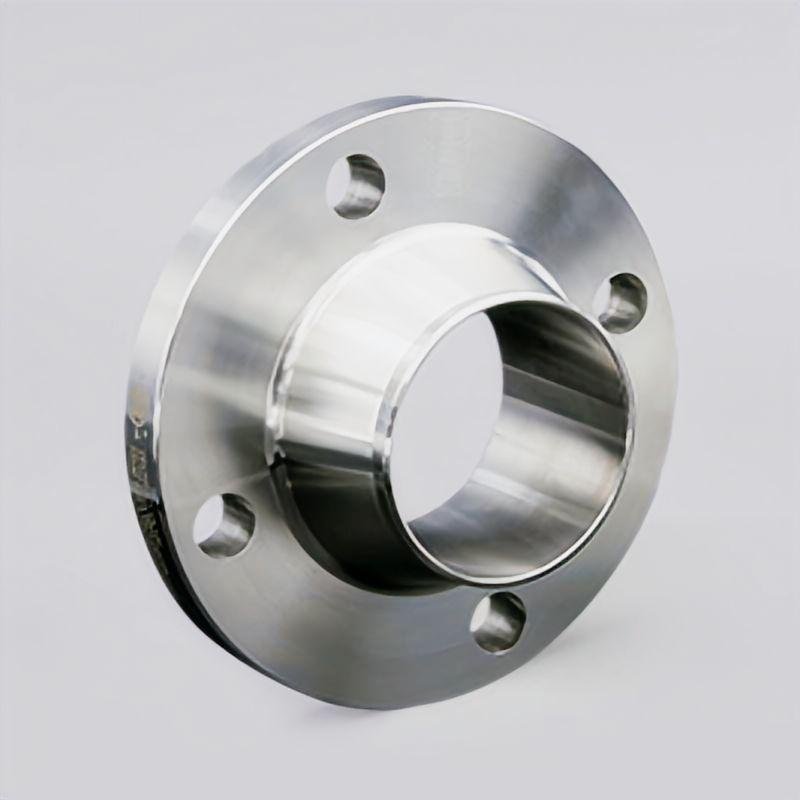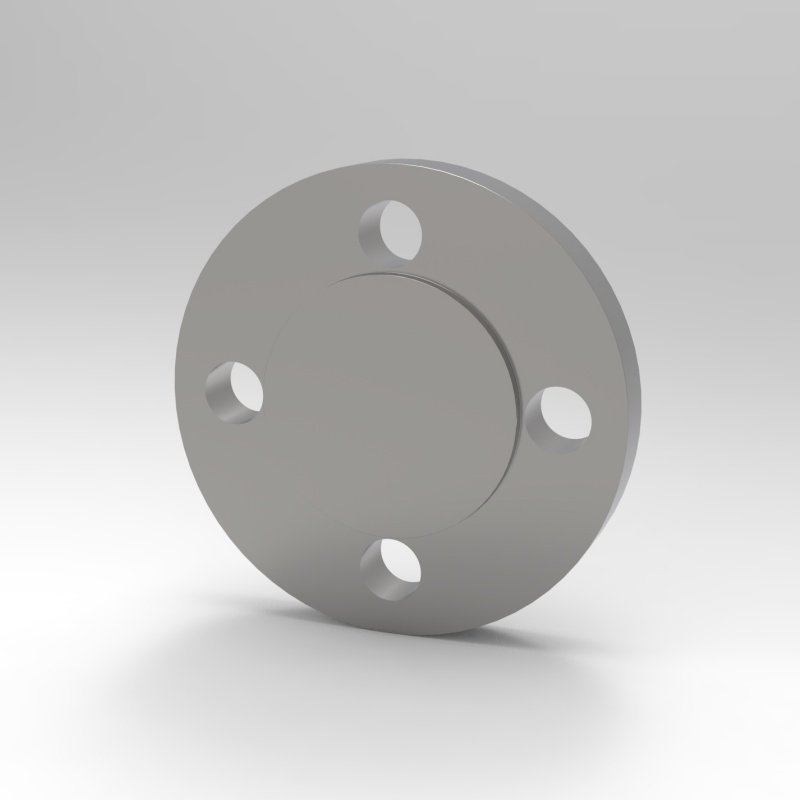

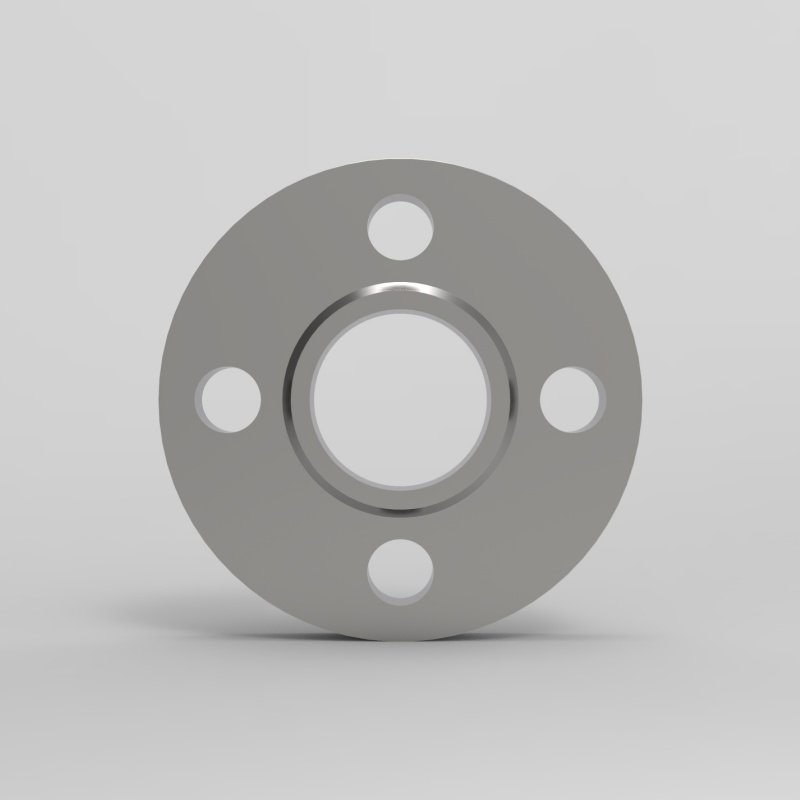
Plate flanges are one of the simplest in structure and most cost-effective flange types in piping systems. They are directly machined from circular steel plates, have no hub transition, and are connected to pipes through fillet welding. The nickel alloy plate flanges supplied by Hefei Tailan Metal Co., Ltd. are manufactured from high-quality nickel-based alloy plates through multiple precision processes including cutting, solution heat treatment, machining, drilling, and pickling/polishing. Featuring simple structure, economical cost, convenient processing, and excellent corrosion resistance, they are specifically designed for low pressure, non-critical service conditions, or large diameter pipe connections.
Application Notes:
- Plate flanges are typically used for low pressure, ambient temperature, non-critical service conditions
- Suitable for non-aggressive media such as water, air, inert gases
- Not recommended for high temperature, high pressure, severe cyclic loading, or toxic media applications
Supply Range
Nominal Diameter (DN/NPS): DN15 – DN600 (1/2 inch – 24 inches); Larger diameters up to DN3000 negotiable
Pressure Class: Class 150 (ASME); PN 6, PN 10, PN 16, PN 25 (EN)
Facing Type: Raised Face (RF), Flat Face (FF)
Bore Diameter (B): 2-4mm larger than pipe OD for easy slipping
Plate Thickness (T): Determined by pressure class and standard requirements
Machining Precision: Sealing surface roughness Ra 3.2μm – 6.3μm (as per standard requirements)
Surface Condition: Machined, Pickled, Polished optional
Dimensional and Appearance Inspection
Overall Dimensions: Measuring all critical dimensions using calipers, micrometers, tape measures
Bore Diameter: Measuring bore size ensuring pipe matching
Sealing Surface: Inspecting flatness, roughness, no scratches
Bolt Holes: Inspecting hole diameter, bolt circle, hole position
Plate Flatness: Inspecting overall flange flatness
Non-Destructive Testing
Penetrant Testing (PT): 100% inspection of sealing surface and critical areas
Ultrasonic Thickness Measurement: Verifying flange thickness uniformity
Marking and Traceability
Each flange has a unique identification, traceable to plate batch and production records.
Third-Party Inspection Support
We welcome clients to designate international Third-Party inspection agencies for pre-shipment inspection, with shipment only after passing inspection.
Dimensions, Standards and Size Range
When a buyer specifies Plate flanges, the first question is almost always which
dimensional standard applies, because it fixes the bolt circle, the flange
diameter and the allowable centre-to-end geometry. For nickel alloy flanges
that split is as follows.
| Size band | Dimensional standard | Typical usage |
|---|---|---|
| NPS 1/2 – NPS 24 (DN15 – DN600) | ASME B16.5 | Process piping, the overwhelming majority of industrial orders |
| NPS 26 – NPS 48 (DN650 – DN1200) | ASME B16.47 Series A and B | Large-bore lines, tank nozzles and offshore risers |
Note that ASME B16.5 and B16.47 are dimensional standards only. They
govern geometry, tolerances and marking; they say nothing about metallurgy. The
material requirement is written separately, and for nickel alloys the usual
reference is ASME SB-462, which covers forged or rolled nickel alloy pipe
flanges, forged fittings and valves intended for corrosive high-temperature
service. SB-462 explicitly lists UNS N10276 (Hastelloy C-276), UNS N06022
(Hastelloy C-22), UNS N06200, UNS N08020 (Alloy 20) and UNS N08031 among the
grades it covers. Where the item is supplied as a forging rather than a rolled
ring, ASME SB-564 (Nickel Alloy Forgings) is the governing material
specification, and it covers UNS N06625 (Alloy 625), UNS N04400 (Monel 400),
UNS N06600 (Inconel 600) and UNS N10276 among others.
Pressure Class and Facing
Nickel alloy flanges are ordered against ASME B16.5 pressure classes
(Class 150 through Class 2500) or against the EN 1092-1 PN ratings. The facing
has to be matched to the service, and this is where most late-stage
non-conformances occur:
- Raised Face (RF) — the default for Class 150–2500
and the correct choice for general process service. - Ring Type Joint (RTJ) — required for high-pressure or
high-temperature service where a leak-tight metal-to-metal seal is
mandatory. - Flat Face (FF) — used where the mating flange is
cast iron or where the bolting is at very low pressure.
Plate flanges supplied by Hefei Tailan Metal is machined from forged or rolled
nickel alloy stock with the hub a flat ring welded around the pipe, usually then machined faced. If your project requires an
unusual facing, a specific corrosion allowance, or a matching pipe wall
thickness, state it on the enquiry and we will confirm the exact line item
against the applicable standard before quotation.
Matching Pipe and Fitting Supply
Flanges are only one half of a pressure boundary, and dimensional
compatibility with the pipe and fittings they connect to is what determines
whether the joint assembles correctly on site. We supply the matching
nickel alloy pipe supplier in the same grade family, so a single order can cover
pipe, fittings and flanges on one heat-number basis. For socket-weld and
threaded pressure classes the fitting dimensions follow ASME B16.11 rather than
B16.9, while butt-weld fittings follow B16.9 and pipe wall thicknesses follow
ANSI B36.10M for carbon steel and B36.19M for stainless. If you are matching an
existing line, send us the nominal size, schedule or wall thickness, class and
facing, and we will confirm dimensional compatibility in writing before the
order is placed.
Need the pipe first? Our slip on flange and
weld neck flange pages carry the same grade cross-reference tables, and
the nickel alloy flange products overview lists every flange type we manufacture.
Enquiries are answered with a quotation, not a catalogue reply.